Venice Biennale 2025
A Studio Meisō Report; Visiting first time

The Venice Biennale is a yearly event, with art and architecture themes being exhibited every alternate years.
About
Some things to put to perspective, especially why this event deserves attention and admiration:
✺ It was established in 1895 and is one of its oldest kind.
✺ This year marks its 19th edition International Architecture Exhibition and is hosting about 65 National pavilions.
✺ The Biennale is displayed across three main locations: 26 pavilions at the Giardini, 22 at the Arsenale, and 15 spread throughout Venice's city center.
✺ There are, interestingly, four new country participants as well- Azerbaijan, Oman, Qatar, and Togo.
✺ There are over 750 multidisciplinary participants and this year is being anticipated to be the largest in the Biennale’s history.
✺ 280+ projects on display
My Experience - First time visiting
This year, focused on architecture, treads on the theme: Intelligens. Natural. Artificial. Collective.
Spearheaded by curator Carlo Ratti, the exhibition comes alive with designers remodeling design thinking - using innovation in material, technology, and addressing some pressing global socio-cultural issues.
The displays - exhibition panels and installations, both, establish discourse, provoking the visitors and evoking emotion. The factual information that accompanies each panel is informative and extremely useful in guiding and establishing an understanding on the ‘why’ of each topic.
The most interesting takeaway for me (& what also resonates with me the most) is how nature is at the heart of each design - be it historical, contemporary or futuristic. It directs our living and existence with harmony in our environment. And architects acknowledge that.
(Photos courtesy: Author)
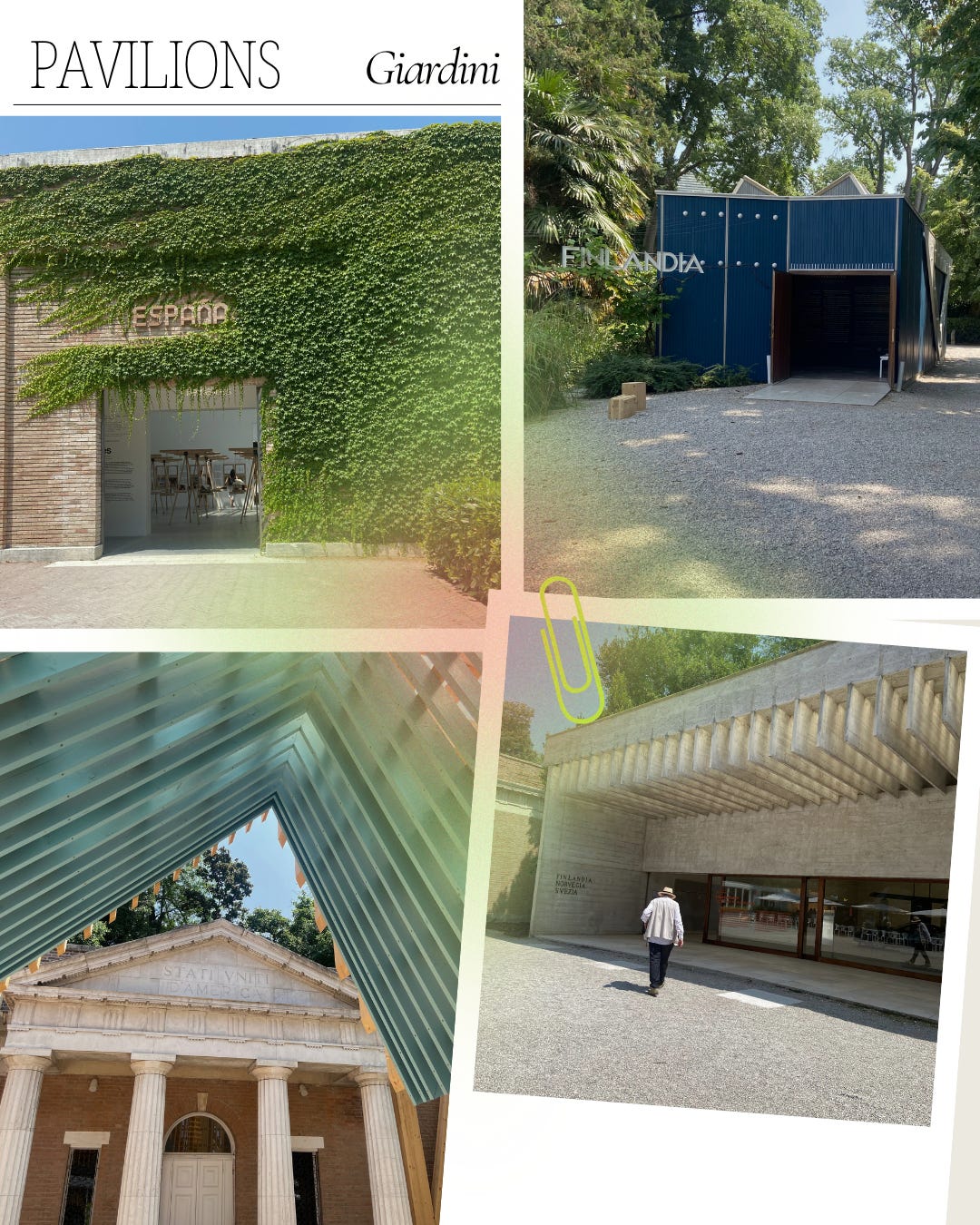
Walking through Giardini
Walking into the two venues - Giardini and Arsenale were always a dream. As an architecture student, all our references for innovative architecture emerged from these exhibits and were used to the very end until the next exhibit took place.
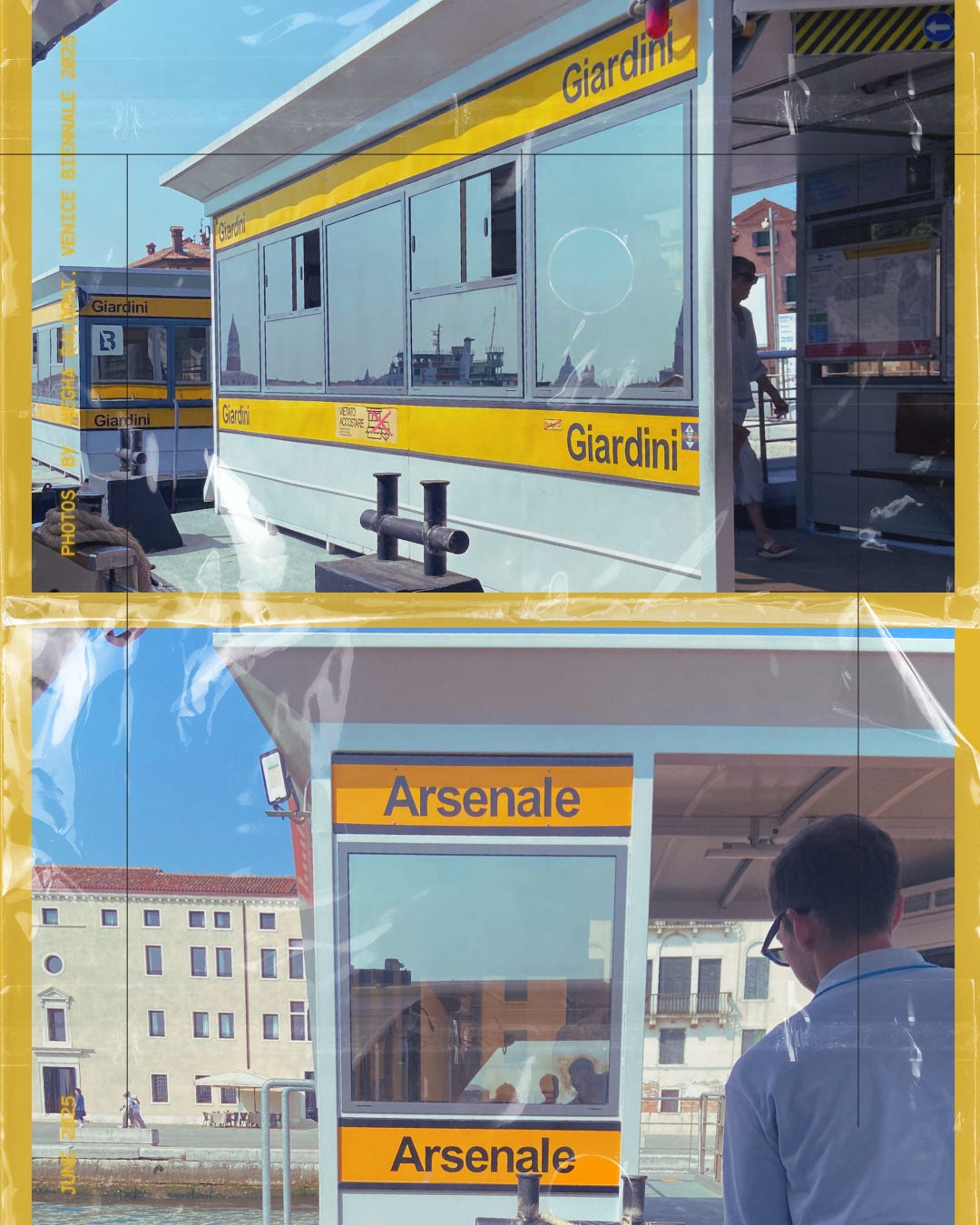
My first stop was Giardini.
As I got down from the vaporetto and walked into a luscious urban forest, the venue emerged as a shy and demure site. Spread across 450,000 square feet of prime garden land facing the Venice lagoon. Designed by the Italian landscape architect Giannantonio Selva in 1807 (completed in 5 years), and commissioned by Napoleon Bonaparte, the Biennale comprises of 29 pavilions. The aim was simple: displaying the best and art and architectural experiences from around the world.
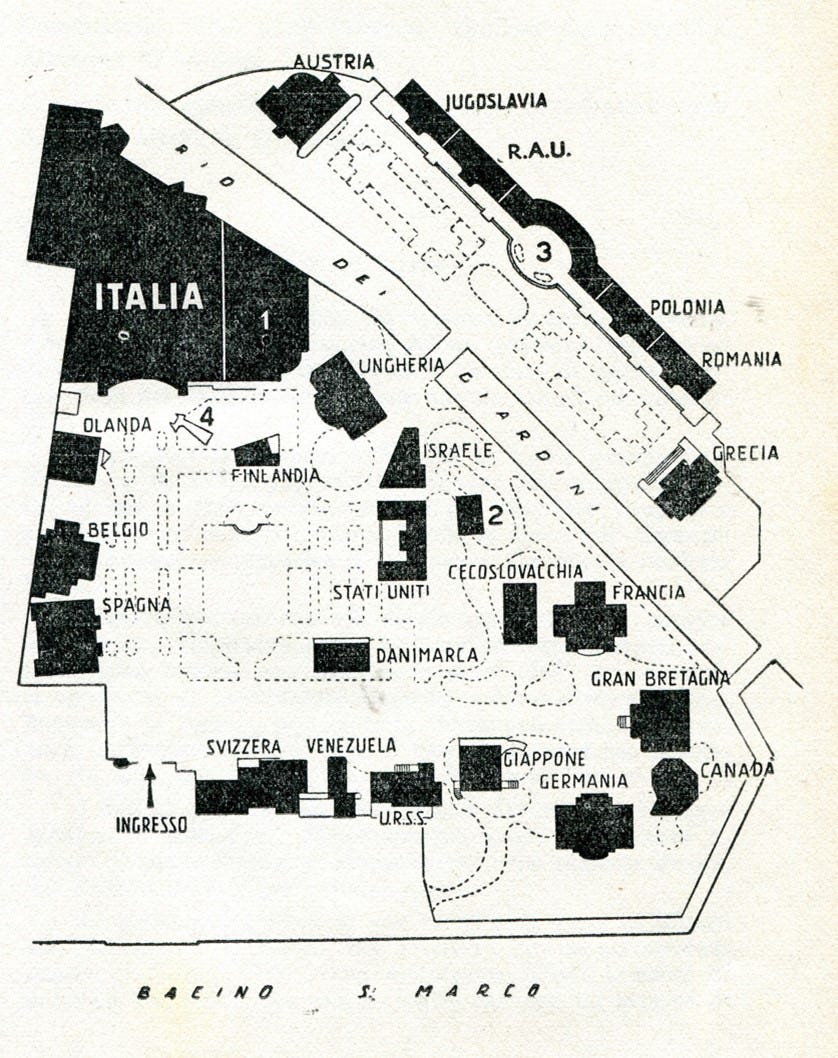
Site map of the Venice Biennale Giardini with the national pavilions in 1958
© Courtesy Archivio Storico della Biennale di Venezia – ASAC
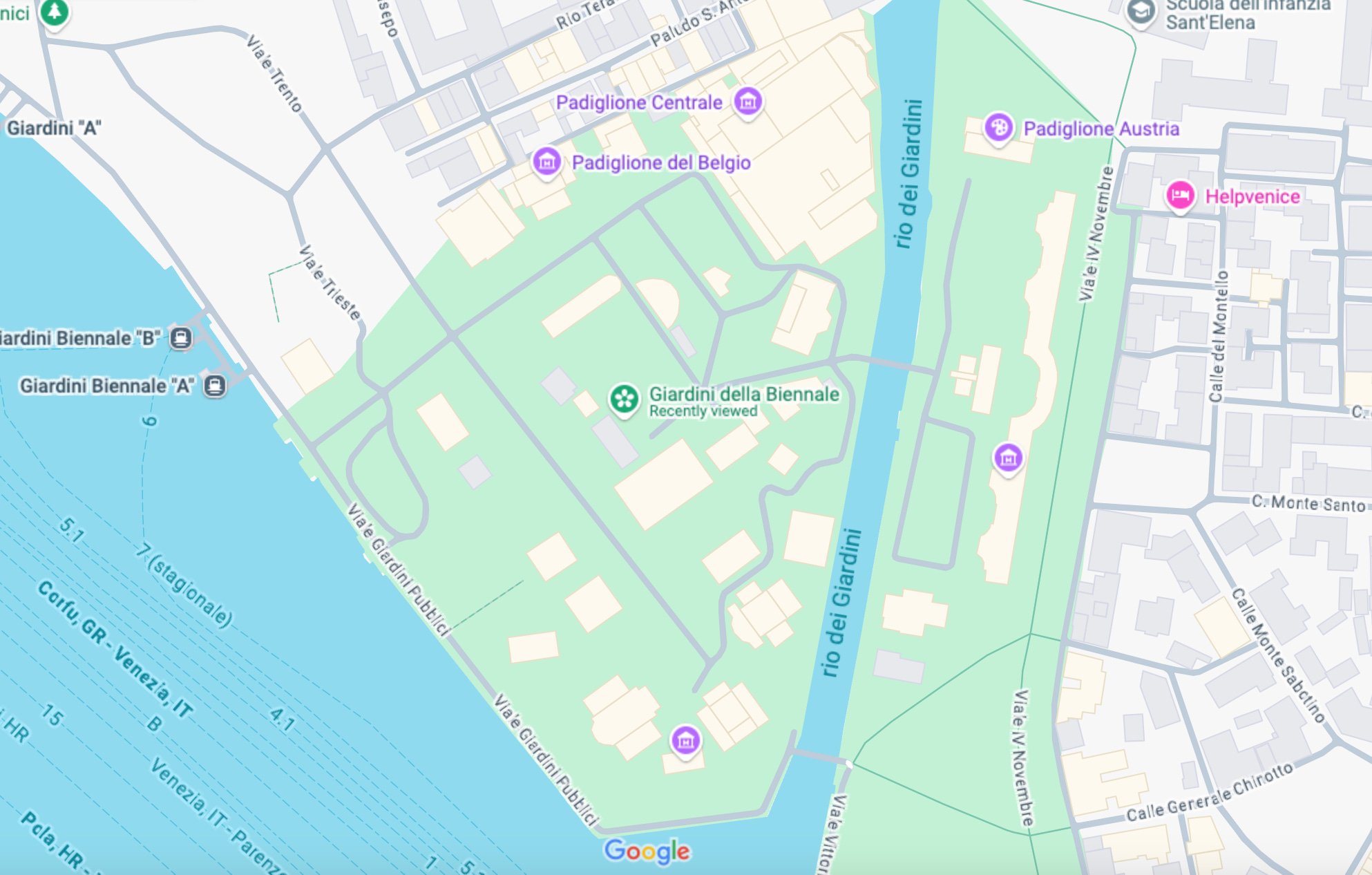
Map courtesy: Google Maps
Navigating the site wasn’t super easy - I found myself returning to the same point over and over again. But somehow, technology and my perseverance combined led me to immerse in experience as much as possible.
And boy, was it worth it.
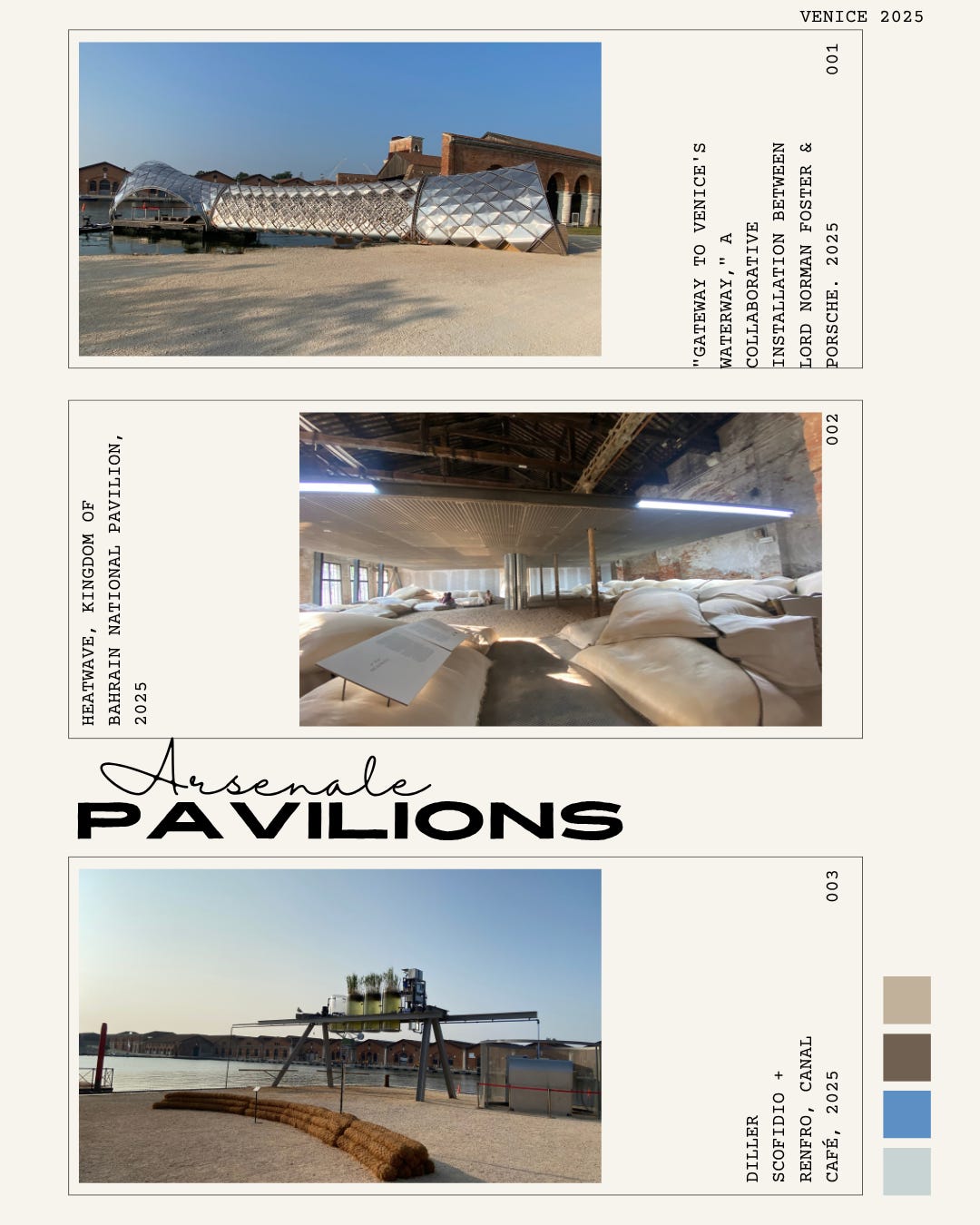
Walking through Arsenale
At this point, past 3.30pm EST on my watch, I ran. A clock ticking over my head, I forgot about eating, breathing or the direction and rushed.
<Of course I took the wrong vaporetto but a kind Italian lady guided me to the correct line>
And I was there. I reached in one piece and stood beaming at the Arsenale building. There were 2-3 pavilions that were exhibited outside the main campus - do check them out if you have the time. And my pilgrimage began.
To say that the curation is highlighting every anxiety-inducing event affecting diverse communities across the world and capturing their resilience is not underrated. That is a fact. While Giardini gently eases the users into these conversations, to me, Arsenale felt more bold and almost interrogative.
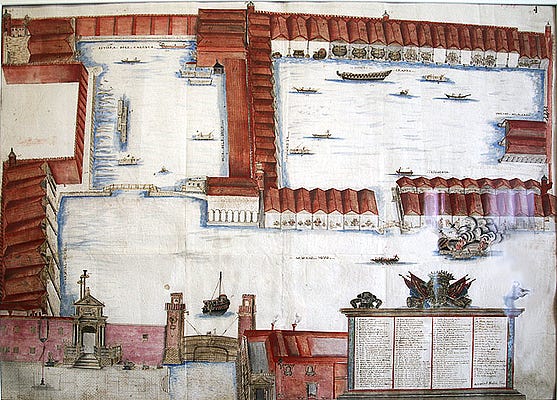
Historical map of the Arsenale, Museo Correr
© Photo: Haupt & Binder
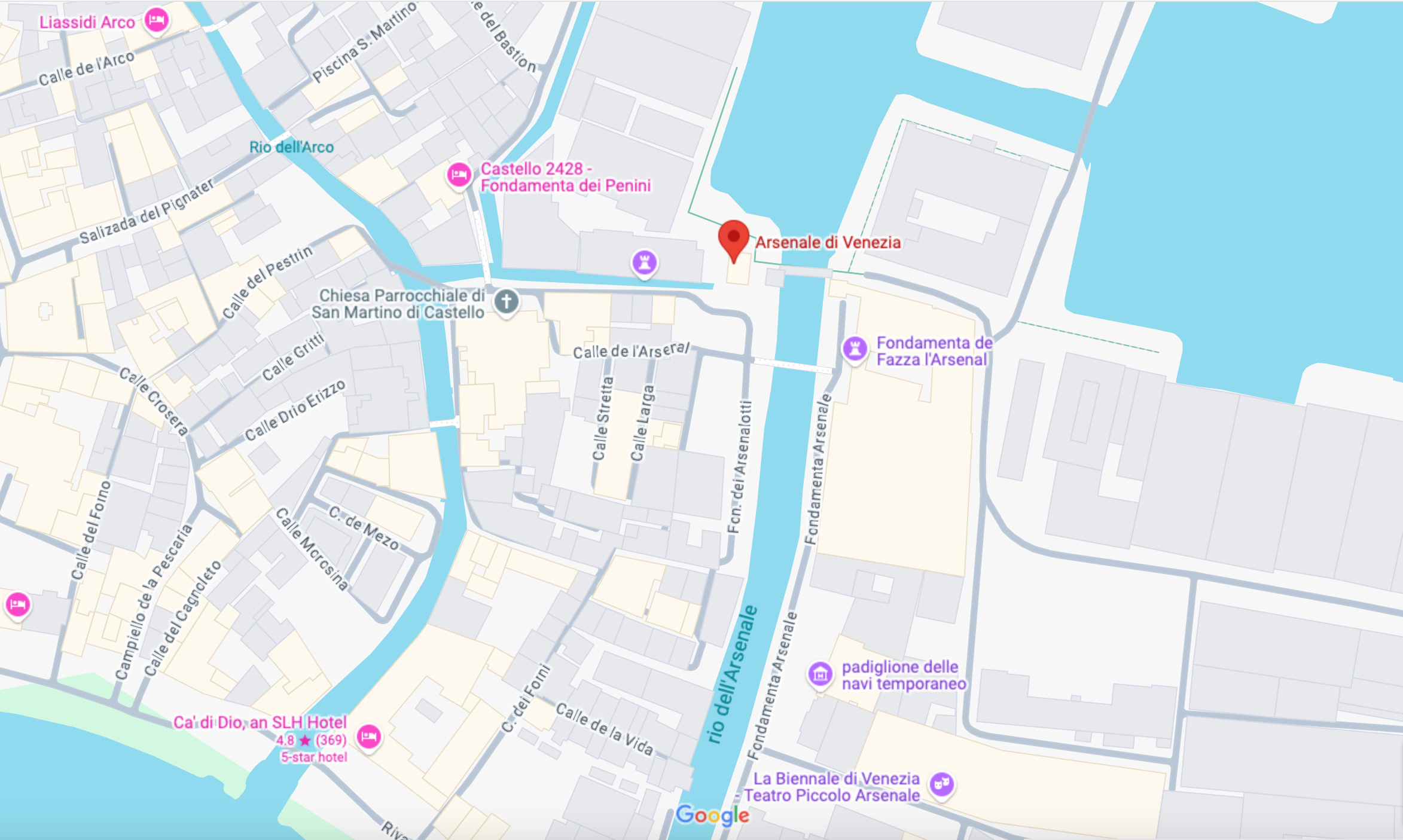
Map courtesy: Google Maps
More composed when strutting through the site. Spread across a staggering 46 hectares (~5000000 square feet), the Arsenale location housed all major starchitects, or the more well known names globally.
Definitely the first venue one should visit if they are pressed on time.
From the Curator’s Note
An interesting quote from the curator’s note that summarises this Biennale edition for me.
Adaptation demands a fundamental shift in architectural practice.
This year's Exhibition, Intelligens. Natural. Artificial. Collective., invites different types of intelligence to work together to rethink the built environment. The title, whose, final syllable, "gens," is Latin for "people," is an invitation to experiment with intelligence beyond today's limited focus on Al and digital technologies, and-demonstrate how we can adapt to the world of tomorrow with confidence and optimism.